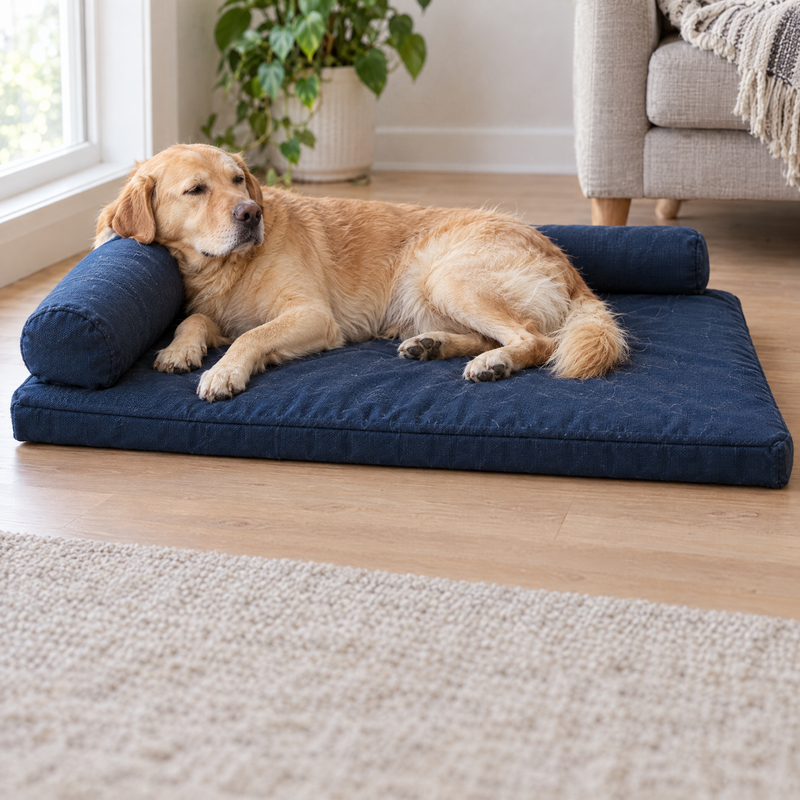
Why Do Dogs Scratch and Dig at Their Bed?
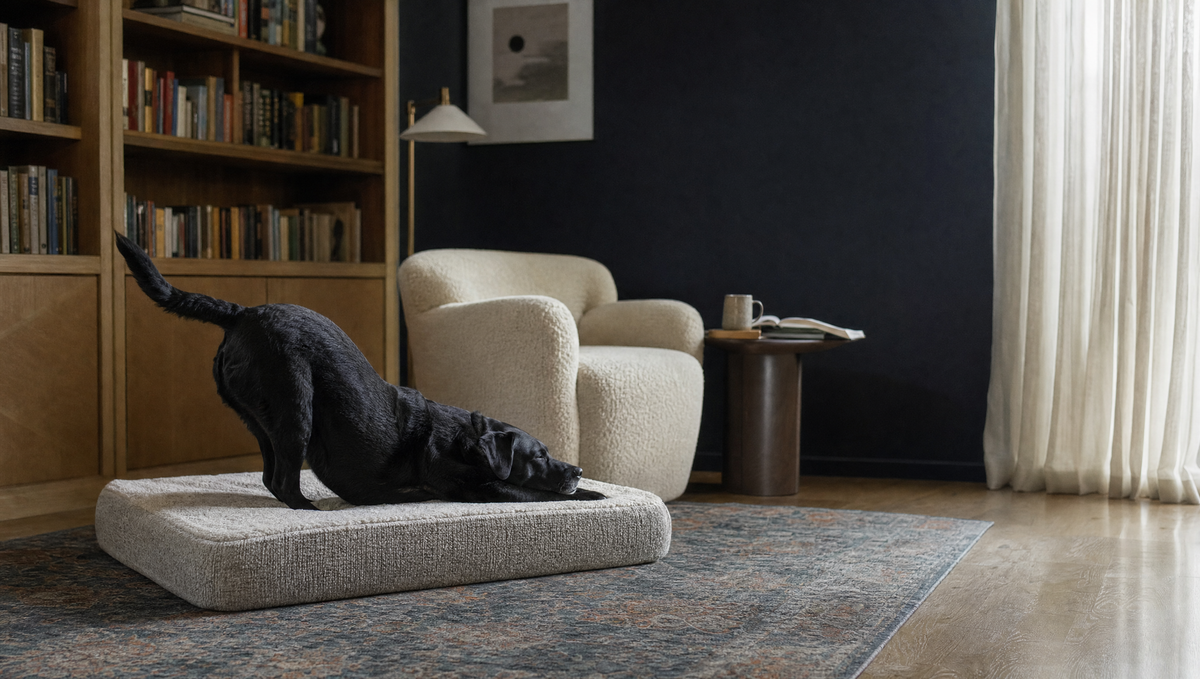
You set down a fresh, fluffy bed. Your dog sniffs it, paws at it, digs a little, turns in circles, and finally flops down. It can look like a lot of work for a nap. The good news: sources we read describe this as a common habit that goes back to your dog's ancestors. Here is what they say, and when it is worth a closer look.
A habit with deep roots
Veterinary and dog-care sources point to the same starting place. One says that in the wild, canine ancestors "would dig to soften the ground and create nests to lie down in, which would offer added protection and help to regulate body temperature." Even on a soft bed, the old routine can show up.
Nobody can ask your dog why. These are the reasons that sources describe as possible, not certain.
Possible reason 1: making a comfy spot
VCA Animal Hospitals explains that to make their sleeping quarters more comfortable, dogs pat down tall grass and move prickly underbrush before lying down. Another page from the same source describes preparing a nest as patting down tall grass, moving underbrush and rooting out rocks and sticks. Pawing at a bed may be your dog's way of arranging it just so. Some pets, VCA notes, are "prissy about their beds, fussily fluffing it into the perfect shape before lying down."
Possible reason 2: adjusting the temperature
Digging can also be about warmth or coolness. VCA says outdoor dogs in hotter climates scratched at the ground to clear away topsoil and grass that held the sun's heat. The American Kennel Club notes that dogs may dig a shallow bed in cool earth to help beat the heat on a warm summer day. In colder climates, VCA says, wild dogs circled to wind themselves into tight balls to conserve body heat.
So if your dog digs on a warm night, or burrows in on a cold one, temperature may be part of the story.
Possible reason 3: staying safe
VCA also describes circling before lying down as an act of self-preservation. The dog may innately know that it needs to position itself a certain way to ward off an attack. It is an old instinct that can stay with a dog even in a safe living room.
Another idea: leaving a scent
VCA notes that dogs have scent glands in their paw pads and between their toes, and that when a dog scratches the ground it leaves scent signals that it was there. That was written about scratching the ground outdoors. Our sources do not say this is why dogs scratch their beds, so treat it as an idea, not a fact.
What about boredom?
The AKC says dogs dig because it is entertaining, and that it is a great relief for bored dogs. That page is about digging in general, not beds in particular. Still, if the habit shows up when your dog is left alone for long stretches, keep it in mind.
When to talk to your veterinarian
Most of the time, a little scratching and turning is part of settling in. VCA says it can be fun to watch pets arrange and rearrange their bed at night. But it also says that if your pet has difficulty settling down or getting comfortable, consult your veterinarian to rule out arthritis or a back or spinal cord issue.
- VCA says dogs in pain will circle excessively as they struggle to find a more comfortable position.
- VCA lists these as signs to watch: spending excessive time circling and pawing, or repeatedly getting up to try again.
- If you notice any of these signs, VCA says to make an appointment to discuss them with your veterinarian.
We cannot tell you what is behind your own dog's habits. A veterinarian can. If the behavior is new, sudden or seems to bother your dog, book a visit.
A note on blankets
If your dog likes to burrow into blankets, the AKC has a safety tip: electric blankets are not a good match for dogs that burrow, because they can be harmful if the dog scratches or digs at the blanket. The same page also warns that heavy covers can make it hard to get air, or cause overheating, just as it would for a person with their head under the blankets. Keep covers light and make sure your dog can easily get out.
Choosing a bed for a digger
None of our sources say that one bed type stops scratching. A general shopping tip, though: if your dog likes to dig, watch how they use their bed for a few days. Do they curl up tight, stretch out, or burrow? That tells you which shape may suit them. A nest or cave bed is made for curlers and burrowers, while a flat bed or mat suits dogs that like to sprawl. You can also browse all our dog beds. When it is time to freshen up the bed your dog has worked so hard on, see our guide on how to wash a dog bed.
Quick answers
Why do dogs scratch their bed before lying down?
Sources describe it as an instinct from their wild ancestors, who dug and patted down a spot to lie in. Comfort, temperature and safety are the reasons they give.
Why do dogs dig on a bed?
Possible reasons include making a comfy nest, adjusting to heat or cold, boredom, or easing worry. Each dog is different.
When should I call the veterinarian?
If your dog has difficulty settling down, circles excessively, or keeps getting up to try again, VCA suggests making an appointment to discuss it.
Sources
- VCA Animal Hospitals, Why Dogs Turn Around Before Lying Down: https://vcahospitals.com/know-your-pet/why-dogs-turn-around-before-lying-down
- VCA Animal Hospitals, Why do pets circle around before lying down?: https://vcahospitals.com/resources/behavior/why-do-pets-circle-before-lying-down
- VCA Animal Hospitals, Unusual pet sleep behaviors to watch out for: https://vcahospitals.com/resources/behavior/unusual-pet-sleep-behaviors-to-watch-out-for
- VCA Animal Hospitals, Why do dogs kick grass after relieving themselves?: https://vcahospitals.com/resources/behavior-dog/why-dogs-kick-grass-after-nature-calls
- American Kennel Club, Why Do Dogs Dig?: https://www.akc.org/expert-advice/advice/why-is-my-dog-digging/
- American Kennel Club, Why Do Dogs Crawl Under the Covers?: https://www.akc.org/expert-advice/advice/dog-crawl-under-covers/
- Hill's Pet, Reasons for Your Dog's Odd Sleep Behaviors: https://www.hillspet.com/dog-care/behavior-appearance/odd-dog-sleeping-behaviors
This article is general information and not veterinary or behavior advice. If your dog's habits change suddenly, talk to your veterinarian.