How to Choose a Dog Bed: Size, Shape and Fill
A good dog bed is one your dog actually uses. That comes down to three choices: how big, what shape, and what it is filled with. Here is a simple way to make each one.
Start with how your dog sleeps
Watch your dog nap for a few days. Most dogs fall into one of a few habits.
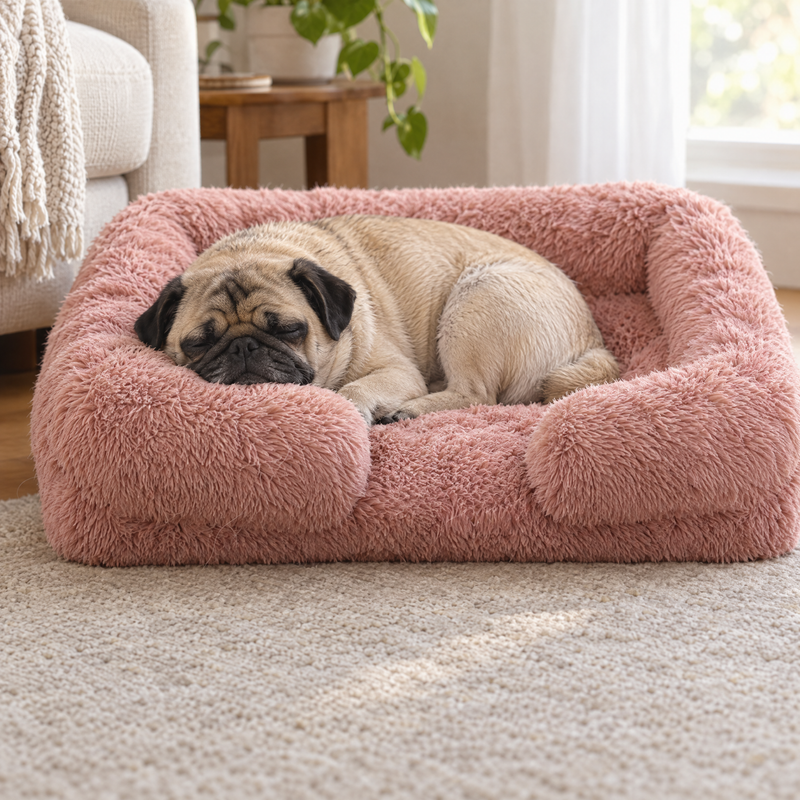
- Curled up tight, nose near the tail. Vets who write for PetMD call this the donut position.
- On one side, legs out. This is the side sleeper.
- Stretched long, or flat on the back with legs in the air.
The habit matters for size and for shape. A dog that curls up can fit in a smaller bed than the same dog stretched out. A dog that stretches needs more room, even if it is a small dog.
How to measure for the right size
Length beats weight. Most guides use the dog's length, so a tape measure is your best tool.
- Wait until your dog is lying down in the usual sleeping position. A soft tape works best.
- Measure from the tip of the nose to the base of the tail. Leave the tail out.
- Add 15 to 30 cm (6 to 12 in). This is your minimum bed length.
- Go to the high end if your dog stretches out. The low end can work for a dog that curls up.
Why a range? The sources we read do not agree on one number. One guide adds 25 cm. Others add 6 to 12 in. A tight curler and a long stretcher do not need the same extra space, so a range is honest.
| Dog, nose to base of tail | Suggested bed length |
|---|---|
| 40 cm (16 in) | 55 to 70 cm (22 to 28 in) |
| 51 cm (20 in) | 66 to 81 cm (26 to 32 in) |
| 61 cm (24 in) | 76 to 91 cm (30 to 36 in) |
| 71 cm (28 in) | 86 to 101 cm (34 to 40 in) |
| 81 cm (32 in) | 96 to 111 cm (38 to 44 in) |
Check the listed inside dimensions of the bed you like, not only the outer size. Sides and padding take room. If the bed has raised edges, the usable sleeping area is smaller than the full length.
What if your dog is between two sizes?
Choose the bigger one. A bed that is a little roomy still works. A bed that is too short leaves a paw or a nose hanging off the edge. If the bed will sit inside a crate, let the crate set the size instead.
Which shape fits your dog?
Once you know the size, match the shape to the sleeping habit.
For curlers: donut, cave and hooded beds
A round donut bed has a raised ring all around. A cave or hooded bed adds a cover on top. Dogs that tuck in tight often like this snug feel. You can browse these in our nests and caves. Check the opening and the inside width before you buy, since a hood can shrink the room you have.
For stretchers: flat beds, mats and cushions
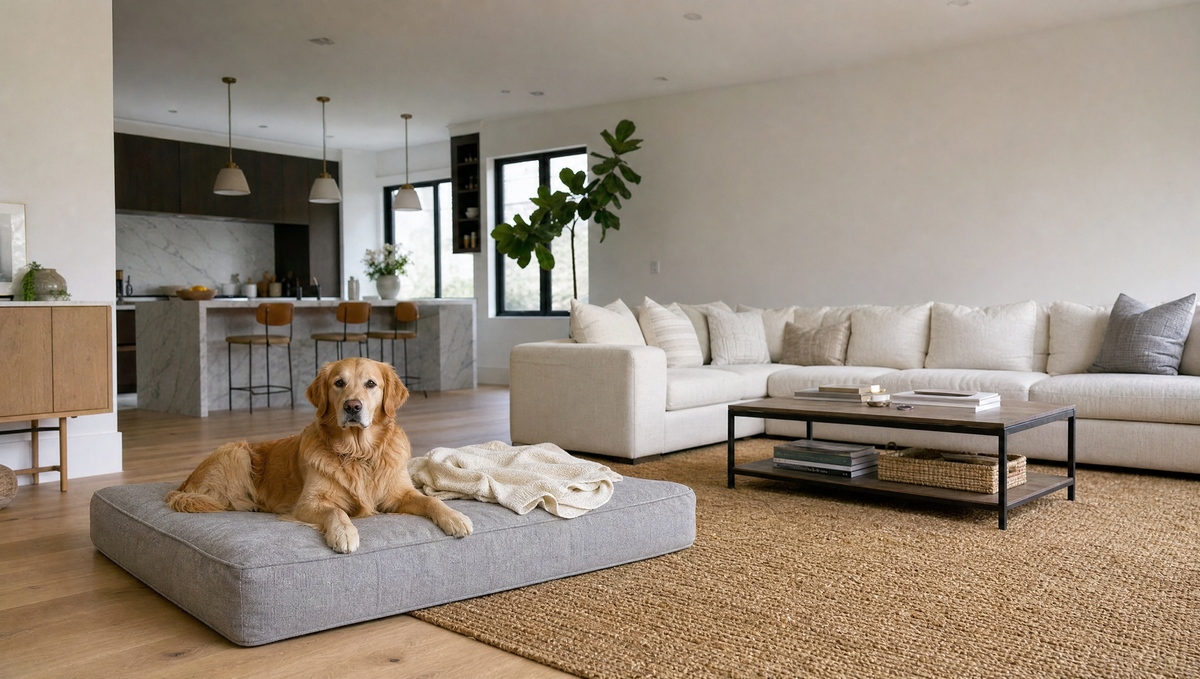
A flat bed or cushion has no sides. Your dog can lie in any direction and use every centimetre. These also slide into crates and onto the floor of a car. See our flat beds and mats.
For head resters: bolster beds
A bolster bed, called a lit à traversin in French, has a cushioned rim on some or all sides. Some dogs like to lean or rest their chin on an edge. You can find several in our dog beds collection.
For leaners: sofa and couch styles
A sofa style has a back and sides, like a small couch. It is a good fit for a dog that likes to lean on something while it dozes. See our sofas and couches.
Other shapes you may see
Sleeping bags, ovals and plain cushions are also common. Treat them the same way: measure first, then check how the sides and openings are built.
Bigger dogs need a bigger bed overall, as the AKC puts it. If your dog measures 71 cm (28 in) or more, start with our large dog beds.
Fill and cover: what to look at
Fill is what sits inside the bed. Soft, fluffy fill and foam are both common, and the AKC lists plush and foam beds among the main types. We do not know how every fill is made, so read the listing and compare three things.
- Thickness: how tall is the bed before your dog lies on it?
- Feel: soft and fluffy, or firm and flat? Choose the feel your dog goes for on the couch or the floor.
- Cover: can it come off, and can you wash it?
The AKC suggests a removable cover that you can toss in the wash weekly, ideally machine washable and dryable. Always follow the care label on your own bed. When the care instructions are not listed, ask before you buy.
A short checklist
- Observe the sleeping habit for a few days.
- Measure nose to base of tail, lying down.
- Add 15 to 30 cm (6 to 12 in).
- Pick a shape that matches the habit.
- Compare thickness, feel and cover.
- Choose the larger size if you are in doubt.
Want to see everything in one place? Browse all products.
Quick answers
What size dog bed do I need?
Measure your dog from nose to base of tail while lying down, then add 15 to 30 cm (6 to 12 in). That is your minimum bed length. Go higher if your dog stretches out.
Should I measure my dog standing or lying down?
Some guides say standing, others say lying down in the usual sleeping position. Lying down shows how much space your dog really takes up to sleep, so we suggest that.
Is a bigger bed always better?
Not always, but a little roomy is fine. Very large beds can be hard to fit in your home. If your dog is between sizes, pick the larger one.
Sources
- PetMD, 6 Dog Sleeping Positions and What They Mean (reviewed by a veterinarian): https://www.petmd.com/dog/general-health/dog-sleeping-positions-and-what-they-mean
- American Kennel Club, The Importance of a Good Dog Bed: https://www.akc.org/expert-advice/home-living/choosing-right-dog-bed/
- The Natural Dog, How to Choose the Right Bed for Your Dog: https://www.thenaturaldogonline.com/content/how-to-choose-the-right-bed-for-your-dog
- PetO, What Size Dog Bed: https://peto.com.au/expert-advice/what-size-dog-bed
- Kuranda, How Much Wiggle Room Does Your Dog Need on a Bed: https://kuranda.com/blog/pick-right-size-bed-for-your-dog
This article is general information and not veterinary advice.