Dog Panting at Night: What's Normal and When to Call the Vet
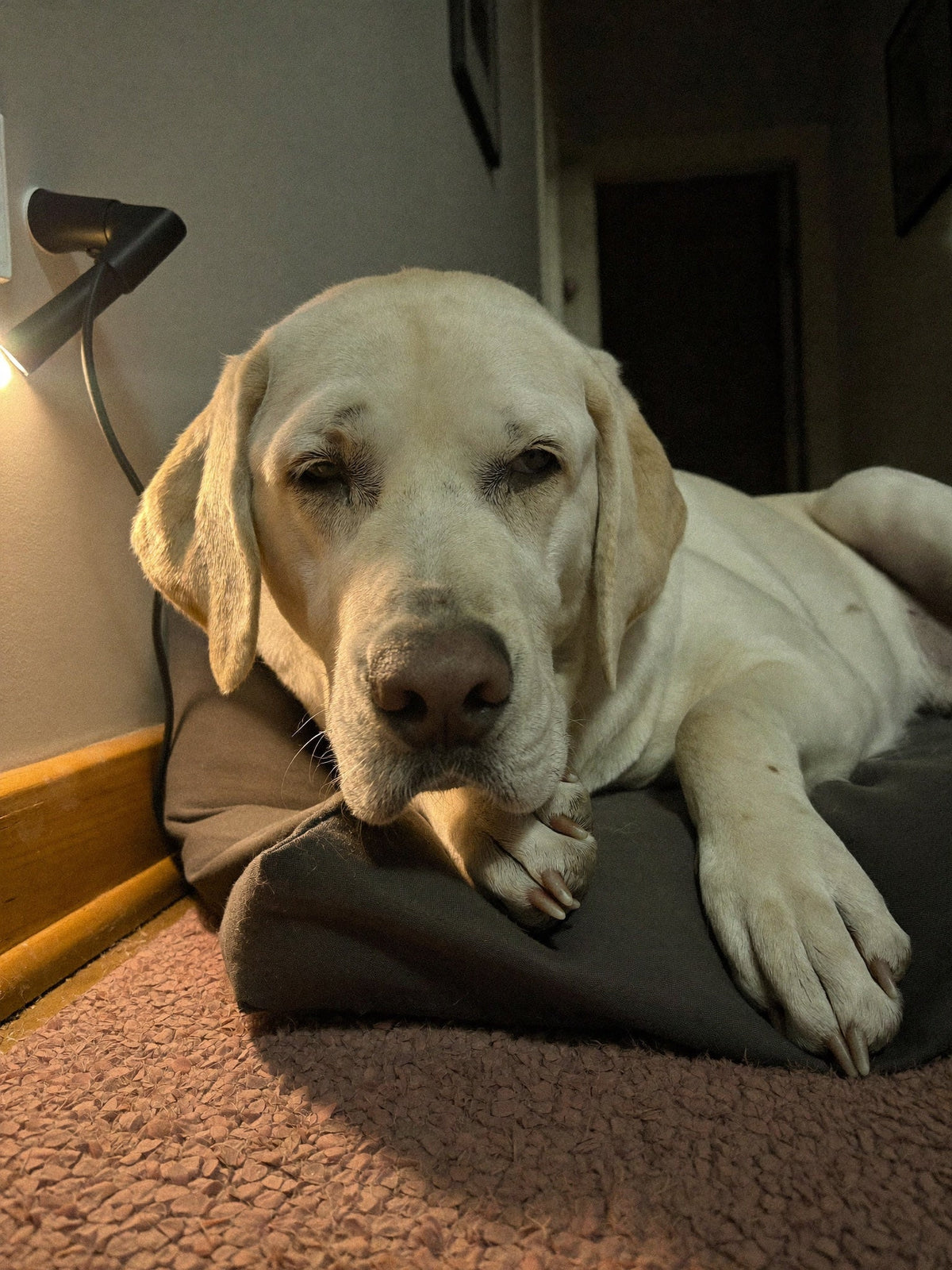
It is the middle of the night. The house is quiet, and your dog is breathing hard beside the bed. Is it just warm in the room, or is something wrong? Most of the time panting is normal. At night, though, sources say it deserves a closer look. Here is how to sort out what you are seeing.
First, why do dogs pant at all?
The AKC explains: "When dogs pant, the moisture on their tongues and airways evaporates, helping regulate their body temperature." Dogs do not cool down the way we do, so panting is a main tool. PetMD adds two more normal reasons: dogs "also pant when they are excited," and "also commonly pant and whine when they are stressed."
Why night is different
During the day, panting after a walk or a game of fetch makes sense. At night, your dog is resting, and that changes the question. PetMD says: "If your dog is panting or breathing rapidly during rest or sleep, however, this is often abnormal panting." The AKC says that if "your dog can't settle or relax comfortably," it needs to be addressed by a veterinarian.
A note on what we found: none of our sources give a list of night-only causes. What they do is describe panting at rest, and night is when a dog is at rest. So we use that.
Normal reasons, to check first
Before you worry, run through the simple ones:
- Heat. Is the room warm, or is the bed beside a heater or in direct sun? This is a general tip, not from a source, but it is the easiest thing to fix.
- A late evening of play or excitement. Panting from a busy evening should settle down.
- Stress. PetMD says dogs commonly pant and whine when stressed. Think of anything that has changed in the house lately, a general tip rather than a source.
If the panting settles quickly once the cause is gone, that is a good sign.
Causes sources link to panting at rest
These are not a diagnosis. Only a veterinarian can tell what is going on with your dog. But sources name these possible causes of abnormal panting:
- Pain or discomfort. PetMD says excessive panting can indicate "nausea, discomfort, and pain." Hill's Pet says dogs in pain "for any reason, including belly pain, pain from trauma or surgical pain, will pant or breathe heavily."
- Heart and lung problems. PetMD names heart problems and lung diseases such as pneumonia.
- Hormonal disorders. PetMD names Cushing's disease. Hill's Pet lists Cushing's syndrome too, along with anemia, laryngeal paralysis and brachycephalic syndrome (the airway problems of flat-faced breeds).
Hill's Pet puts it simply: "Panting for no clear reason may indicate an underlying medical condition."
Counting breaths
If you want something concrete to tell your vet, you can count your dog's breaths while they rest. A veterinarian quoted by the AKC says: "A normal resting respiratory rate is between 20 and 35 breaths per minute. When we see dogs entering that 40 to 60 breaths per minute range, that's very concerning." That is one vet's guidance, so treat it as a conversation starter and not a test you score yourself.
Warning signs that mean call now
The AKC lists signs that go with a serious problem: vomiting, diarrhea, dark red or bluish gums, weakness or being unable to walk, collapsing suddenly, muscle tremors, and seizures in extreme cases. Hill's Pet says that if you notice panting or heavy breathing together with other signs of sickness, "contact your vet immediately." If your dog is overheating, the same AKC vet says that a breathing rate not going down within a 35-minute window, and getting worse, is when she would be concerned about hyperthermia. When in doubt, call your veterinarian or an emergency clinic.
Help your dog rest well
Our sources do not say that a bed fixes panting, and we will not claim one does. What a good sleep spot can do is remove simple causes: a place that is cool, quiet and away from heat. If your dog may be uncomfortable, our guide on how to choose a dog bed covers size, shape and fill, and you can browse all our dog beds. If you are also noticing noisy breathing, see dog sleep apnea.
Quick answers
Why is my dog panting at night when it is not hot?
Possible reasons from sources include stress, excitement, pain, and heart, lung or hormonal conditions. PetMD says panting during rest or sleep is often abnormal, so mention it to your vet.
Is it normal for a dog to pant while sleeping?
PetMD says panting or rapid breathing during rest or sleep is often abnormal. If you notice it, mention it to your vet, especially if it keeps happening.
When is it an emergency?
The AKC lists dark red or bluish gums, collapse, vomiting, tremors and weakness among the signs. Call your veterinarian or an emergency clinic.
Sources
- PetMD, Why Do Dogs Pant? What To Know About Dogs and Panting: https://www.petmd.com/dog/general-health/why-do-dogs-pant
- American Kennel Club, Why Does My Dog Pant? What to Know: https://www.akc.org/expert-advice/health/why-do-dogs-pant/
- Hill's Pet, Understanding Dog Panting: When Should You Worry?: https://www.hillspet.com/dog-care/healthcare/dog-panting-concerns
This article is general information and not veterinary or behavior advice. If your pet's habits change suddenly, talk to your veterinarian.