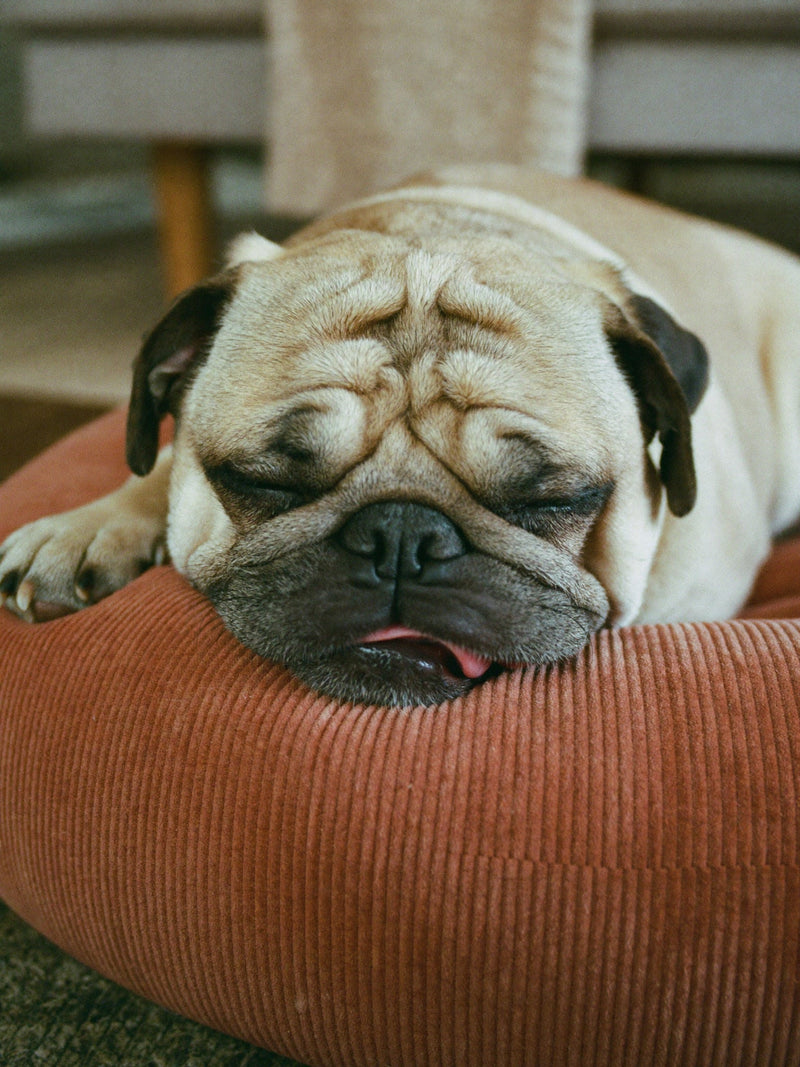
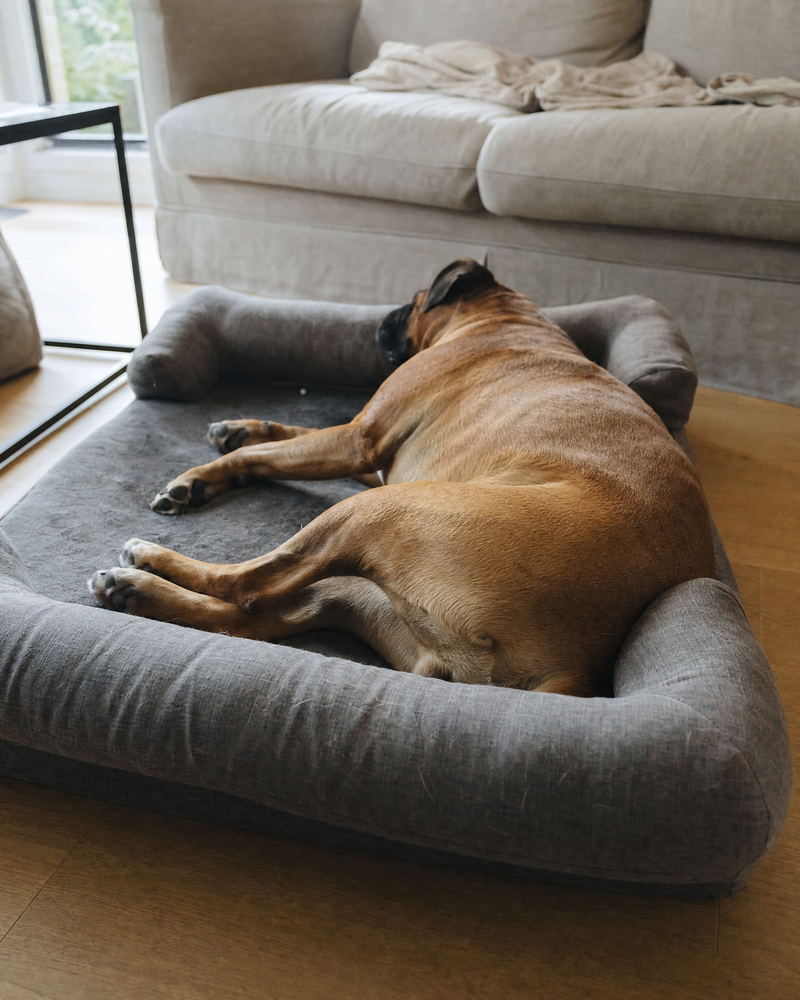
Why Is My Puppy Breathing Fast While Sleeping?
You peek at your sleeping puppy and their little ribs are going like a drum. Is that normal? Often, yes. But breathing rate is also one of the few things you can measure at home, and vets use it. Here is what sources say, and how to check.
Why a sleeping puppy may breathe fast
PetMD says: "Puppies are also prone to heavy breathing during sleep due to dreaming." Dogs have REM sleep, the stage where dreams happen, and VCA Animal Hospitals says they enter it quickly, about 20 minutes into sleep. PetMD explains that during REM a dog's eyes move behind closed eyelids and the large body muscles are turned off, so the dream is not physically acted out. The AKC says puppies and senior dogs dream more often than middle-aged dogs, and PetMD says twitching is most common in younger and older dogs. Our guide do dogs dream goes into the details.
One note on the evidence: of the sources we read, only PetMD links fast breathing to dreaming in puppies directly. So this is a reasonable explanation, not a guarantee.
How to count your puppy's breaths
VCA gives a simple method for a pet that is resting or asleep:
- Watch the chest. Count one breath each time it moves in and out once.
- Time 30 seconds on a watch or phone and count the breaths.
- Multiply by 2 to get breaths per minute.
Count when your puppy is calm and asleep, not just after a play session. A dream can speed things up for a short time, so VCA suggests repeating the count a few times over the next couple of hours to see whether the number is consistent.
What is the normal range?
VCA says: "A normal breathing rate while resting calmly or sleeping is between 15 and 30 breaths per minute, for all normal dogs and cats." PetMD gives the same range for dogs, 15 to 30 breaths per minute. VCA adds that resting or sleeping rates that are "consistently greater than 30 breaths per minute are increased and considered abnormal."
When to call your vet
Here the sources differ in how urgent they sound, so we will set them side by side:
- VCA: if the rate is consistently increased, "you need to contact your veterinarian as soon as possible." If it comes with other clinical signs, it may be an emergency, and after hours you may need an emergency veterinary center.
- PetMD: says that an increased rate, usually greater than 30 breaths per minute, when sleeping or resting "is a medical emergency." It also lists a change in gum color from pink to blue, purple, gray or white as a sign that needs immediate attention.
The practical reading: do not wait if the number stays above 30 when your puppy is truly resting, or if anything else looks wrong. If you are unsure, call your vet or an emergency clinic.
A puppy that seems well is a good sign
PetMD says: "If your puppy is bright, alert, playful, and eating well, heavy breathing may be nothing to worry about." That is about a puppy who is excited or has been playing. It does not replace counting the rate at rest.
Other sleep movements to know about
Twitching and soft barks during REM are common. VCA says to speak with your veterinarian if your puppy is kicking violently, barking, growling, chewing or biting in their sleep. PetMD lists signs of a seizure: stiffening of the body, labored breathing, eyes wide open but not reacting, and loss of consciousness with no response to your voice. If you see these, call your vet.
A calm, safe place to sleep
A bed will not change a puppy's breathing rate, and we make no health claims about ours. A quiet, comfortable spot does make it easier to watch your puppy sleep calmly and count. Browse our dog beds, and see how much puppies sleep, how to get a puppy to sleep through the night and dog panting at night.
Quick answers
Is it normal for a puppy to breathe fast while sleeping?
PetMD says puppies are prone to heavy breathing during sleep due to dreaming. Counting the rate tells you whether it is in the normal range.
How many breaths per minute is normal for a sleeping puppy?
VCA gives 15 to 30 breaths per minute for resting or sleeping dogs and cats.
When is it an emergency?
PetMD says a rate above 30 at rest is a medical emergency, and VCA says to call your vet as soon as possible, and that other signs may make it an emergency. Pale, blue or gray gums are a reason to go now.
Sources
- VCA Animal Hospitals, Home Breathing Rate Evaluation: https://vcahospitals.com/know-your-pet/home-breathing-rate-evaluation
- PetMD, Dog Breathing Heavy? Why It Happens and When To Worry: https://www.petmd.com/dog/symptoms/dog-breathing-heavy
- PetMD, Why Do Dogs Twitch in Their Sleep?: https://www.petmd.com/dog/general-health/why-do-dogs-twitch-their-sleep
- VCA Animal Hospitals, Why Do Puppies Twitch In Their Sleep: https://vcahospitals.com/pediatric/puppy/behavior-training/why-do-puppies-twitch-in-their-sleep
- American Kennel Club, Do Dogs Dream?: https://www.akc.org/expert-advice/lifestyle/do-dogs-dream/
This article is general information and not veterinary or behavior advice. If your pet's habits change suddenly, talk to your veterinarian.