Dog Sleeping Positions and What They Mean
Watch your dog nap for a few minutes and you will see it: some dogs stretch out on their side, some curl into a tight ball, and some flop on their back with all four paws in the air. It is tempting to read a message into every pose. The sources we read do offer some clues, and they are careful to call them clues, not facts. Here is what they say.
One rule before we start
Nobody can ask a dog what a position means. Temperature, age, the bed and the room all play a part, and the same dog may sleep three different ways in one night. What matters most is what is normal for your dog, and whether that changes.
On their side
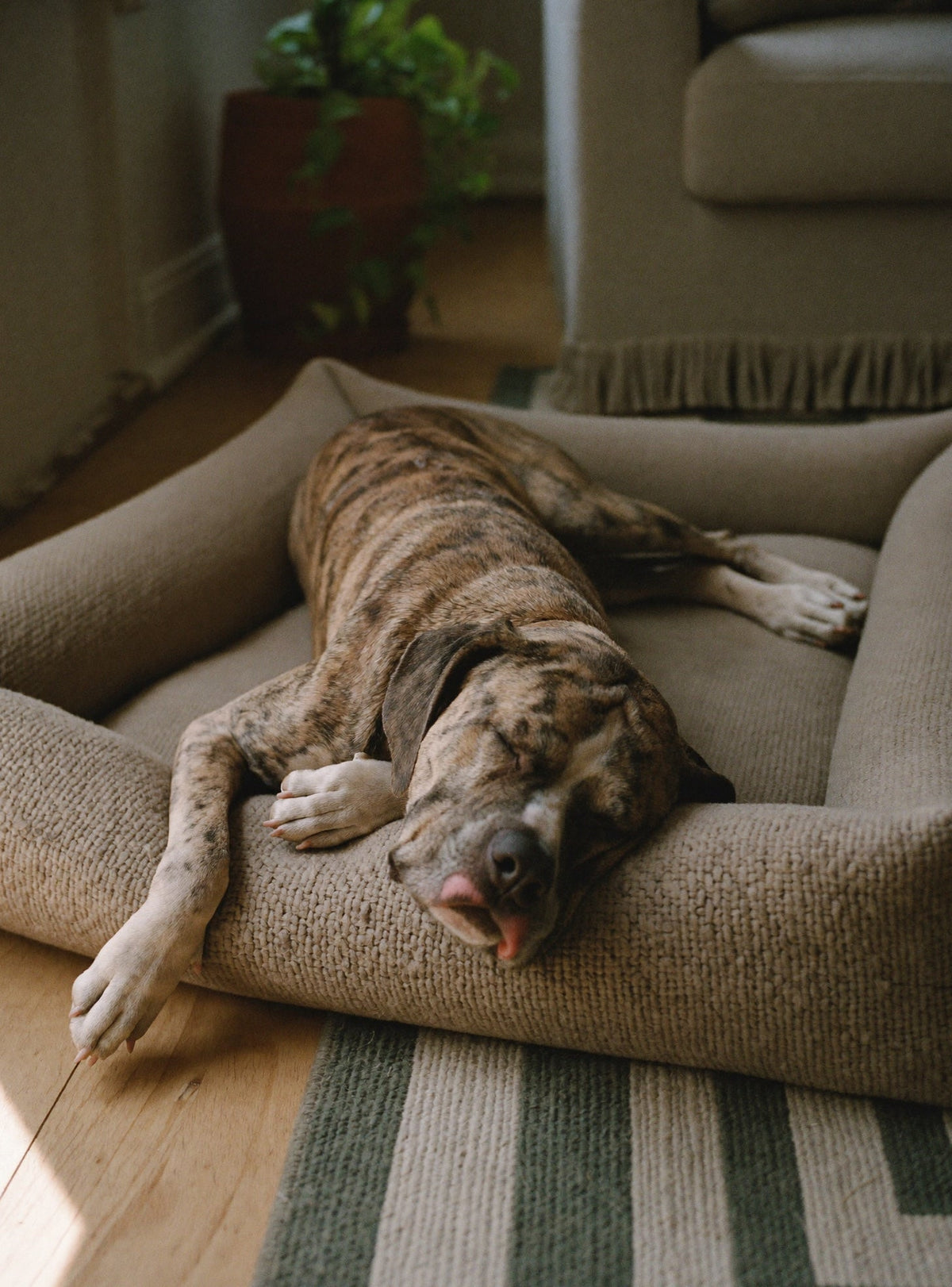
VCA Animal Hospitals describes a dog sleeping deeply on their side, feet out from under them, and says: "This is the most relaxed of all sleep positions." If your dog does this, they are probably settled in.
Belly up
PetMD describes this as sleeping on the back with the belly fully exposed and the legs in the air. Sources give a few reasons, and they fit together:
- Comfort and trust. The AKC's chief veterinarian says it "means they feel relaxed and mentally comfortable in your household." Hill's Pet says it is a sign that a dog trusts you and feels safe and secure where they are.
- Cooling off. The same AKC page says: "Some dogs cool themselves off better when they lie on their back and expose themselves." VCA also mentions that a dog with feet in the air may be "a bit on the warm side and letting off steam."
Curled up in a ball
PetMD calls this the donut. Two reasons come up. VCA says the dog may be feeling the cold and "keeping warm in this cozy pose." Hill's Pet says that in the wild, wolves and wild dogs curl up "in order to protect their vulnerable organs from an attack," and the habit has stayed.
There is one more thing to know. PetMD says: "A dog that feels unwell might also be curled up in a ball. So, if this is an unusual position for your dog, keep an eye on them and consider scheduling a check-up with your veterinarian." A dog who always sleeps curled is just a curler. A dog who suddenly starts is worth a second look.
Sphinx, or lion pose
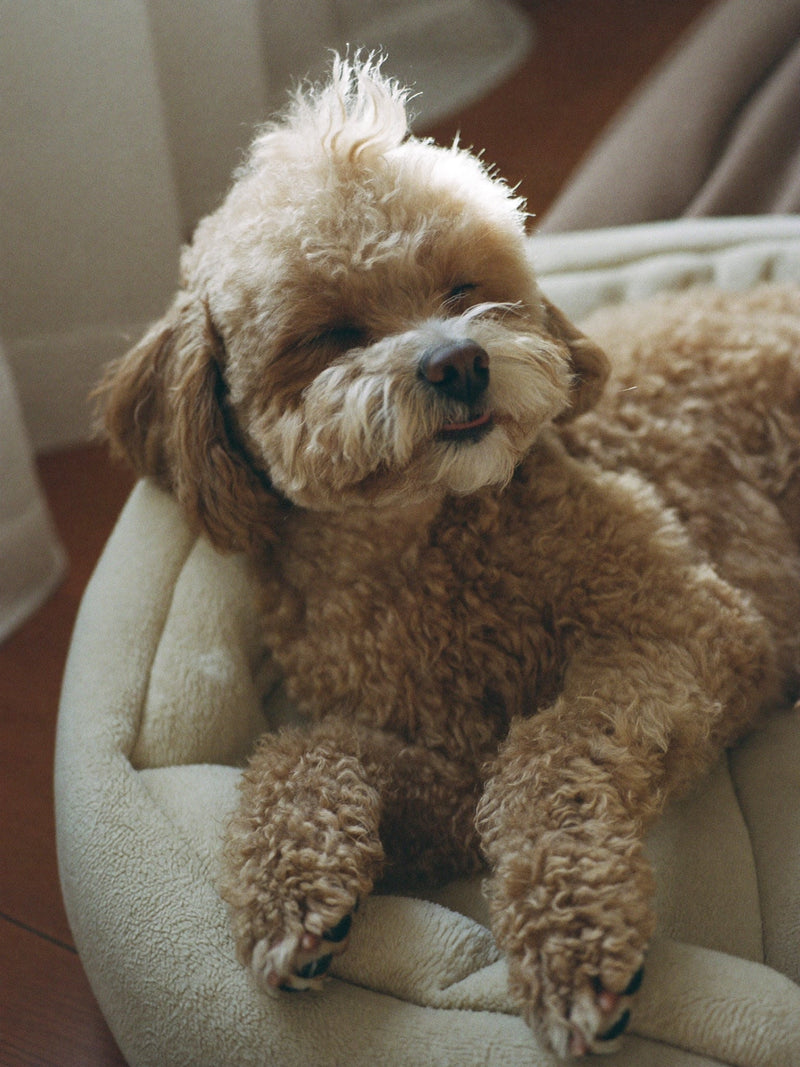
This is belly down, crouched on all fours, with the head resting on the front paws. VCA says the dog is "ready to jump into action at any moment." PetMD adds that it can be a dog who is just falling asleep and wants to stay alert. It is often a nap, not deep sleep.
Superman, and the sploot
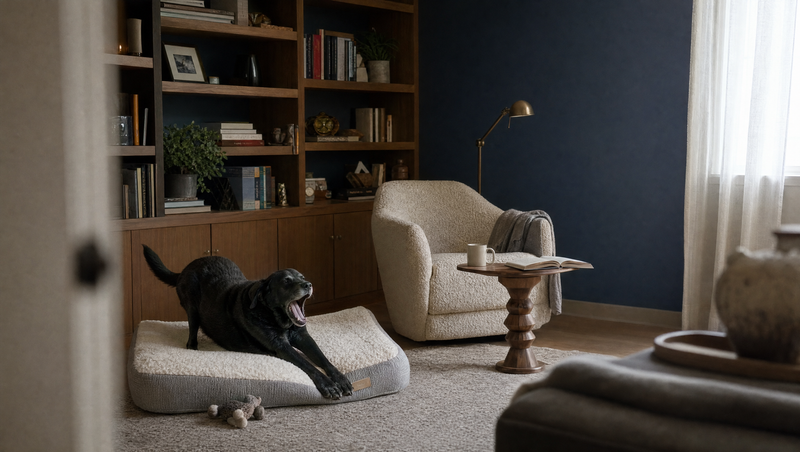
PetMD describes the superman as lying stomach down with the back legs straight out behind and the front legs stretched forward. VCA says it often shows up after a long day of play. Its page on the sploot, a similar pose with the legs stretched back, says a dog may do it on cold tile or cool grass to cool off.
VCA also says splooting "can be a cause for concern" if it comes with "difficulty getting up, pain or history of exposure to extreme heat," and in that case to consult your veterinarian.
Snuggled up to you
VCA says a dog who cuddles up to a toy, another pet or a person is "feeling the need for love and connection." PetMD says that being close is "a cross-species way of demonstrating" the bond between you and your dog, and it also points to warmth, with the old "three-dog night" expression.
What about a dog who sleeps with their back or rear turned to you? Our sources do not single out that pose, so we will not invent a reason for it. What they say about sleeping close in general (bond, warmth, security) is the best we can offer.
When a position is a reason to call the vet
A single position is almost never the story. A change is. VCA says that if your pet is "spending excessive time circling and pawing, repeatedly getting up to try again, something might be amiss," and that painful conditions such as arthritis may stop a pet from finding a restful position. Its advice: "make an appointment to discuss them with your veterinarian."
Matching the bed to the sleeper
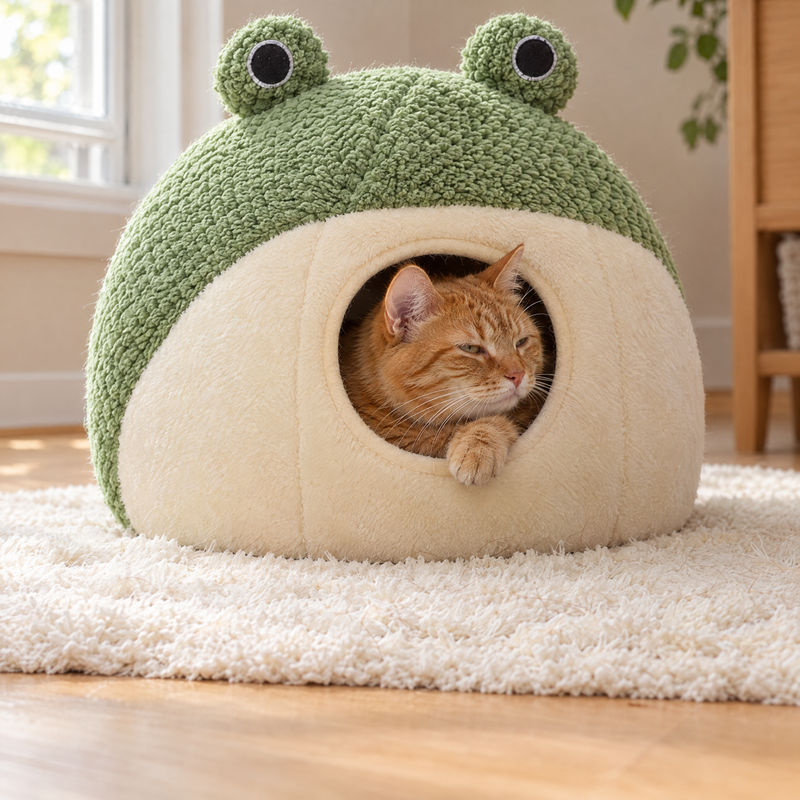
None of our sources say a position needs a particular bed. As a general shopping tip, watch how your dog sleeps for a few days. A curler may like a nest or cave bed, where the sides give something to curl against. A sprawler, a belly-up sleeper or a superman may prefer room to stretch on a flat bed or mat, and a dog who likes to rest their chin on something may like a bolster bed. For more help, read how to choose a dog bed and our guide to bed shapes. And if you wonder why all this napping, see how many hours dogs sleep.
Quick answers
What does it mean when a dog sleeps on their back?
Sources say it usually points to comfort and trust, and sometimes to a dog cooling off on a warm night.
Why does my dog sleep curled up?
Sources give two reasons: keeping warm, and an old instinct to protect the belly. If curling up is new for your dog, PetMD suggests a check-up.
Is any sleeping position a problem?
Not on its own. A sudden change, trouble getting comfortable, or pain are the things to bring to your vet.
Sources
- VCA Animal Hospitals, Dog sleeping positions decoded: https://vcahospitals.com/resources/behavior-dog/dog-sleeping-positions-decoded
- PetMD, 6 Dog Sleeping Positions and What They Mean: https://www.petmd.com/dog/general-health/dog-sleeping-positions-and-what-they-mean
- American Kennel Club, Why Does My Dog Sleep on Their Back?: https://www.akc.org/expert-advice/advice/why-does-my-dog-sleep-on-his-back/
- Hill's Pet, Reasons for Your Dog's Odd Sleep Behaviors: https://www.hillspet.com/dog-care/behavior-appearance/odd-dog-sleeping-behaviors
- VCA Animal Hospitals, Why do dogs and cats sploot?: https://vcahospitals.com/resources/behavior/what-is-a-sploot-and-why-does-my-pet-do-it
- PetMD, Why Does My Dog Lie on Me?: https://www.petmd.com/dog/behavior/why-does-my-dog-lie-on-me
- VCA Animal Hospitals, Unusual pet sleep behaviors to watch out for: https://vcahospitals.com/resources/behavior/unusual-pet-sleep-behaviors-to-watch-out-for
This article is general information and not veterinary or behavior advice. If your pet's habits change suddenly, talk to your veterinarian.